Hemophilia is broadly defined as a rare, inherited bleeding disorder
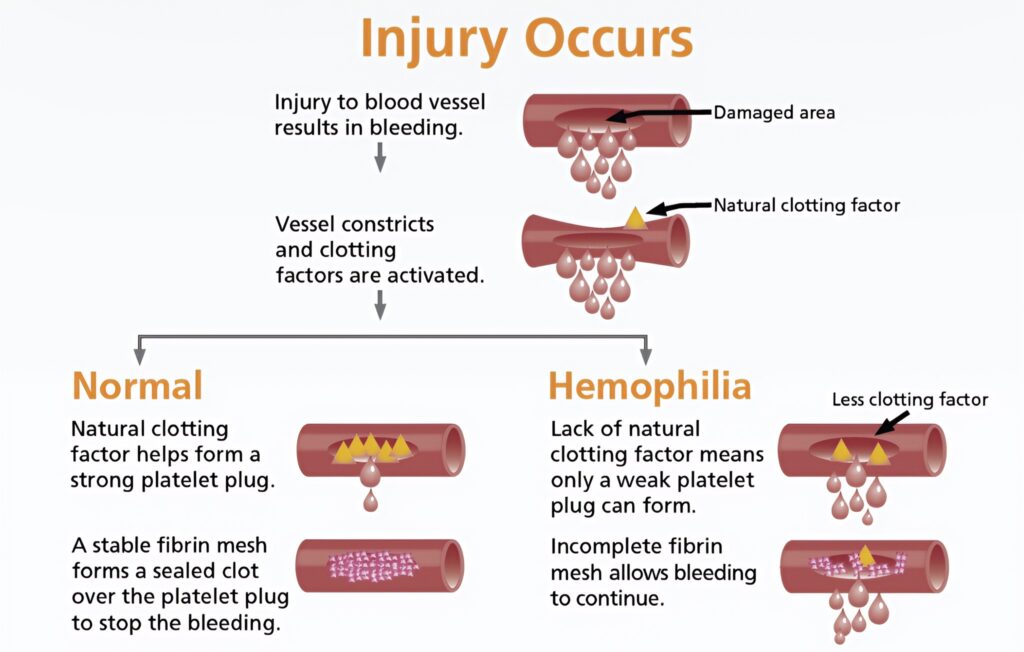
Recall that people with less than 1% activity have severe hemophilia, people with 1% to 5% activity have moderate hemophilia, and people with greater than 5% activity have mild hemophilia (the range of normal percent activity is 50% to 200%)

Types of Hemophilia The sources identify three main types of hemophilia:
Hemophilia A (Classic Hemophilia): This is the most common type, accounting for about 75% to 85% of all hemophilia cases. It is caused by a deficiency or defect in clotting factor VIII.
Hemophilia B (Christmas Disease): This is the second most common type, making up about 10-20% of all hemophilia cases. It results from a deficiency or defect in clotting factor IX.
Hemophilia C: This type is rarer and is caused by a deficiency in clotting factor XI. Its effects on clotting are far less pronounced than Hemophilia A or B, and symptoms are often mild, typically involving bleeding difficulties only after accidents, trauma, or surgery. Hemophilia C is distinguished from Hemophilia A and B by its autosomal inheritance pattern, meaning the gene is not located on a sex chromosome.

Some More Details

What is hemophilia?

The definition of hemophilia was not always stable and clear. After the discovery of a “new hemophilia” in 1952, which was named “Christmas disease” (Hemophilia B).

Which Hemophilia was it A or B?

This specific question directly addresses the type of hemophilia that affected the royal families. The source provides a concise answer: “EITHER!”.

What are hemophilia treatments?

The primary treatment for hemophilia is replacement therapy, which involves infusing concentrates of the deficient clotting factor directly into a patient’s vein. This replaces the missing or low levels of clotting factor VIII (for Hemophilia A) or factor IX (for Hemophilia B)

History Of Hemophilia

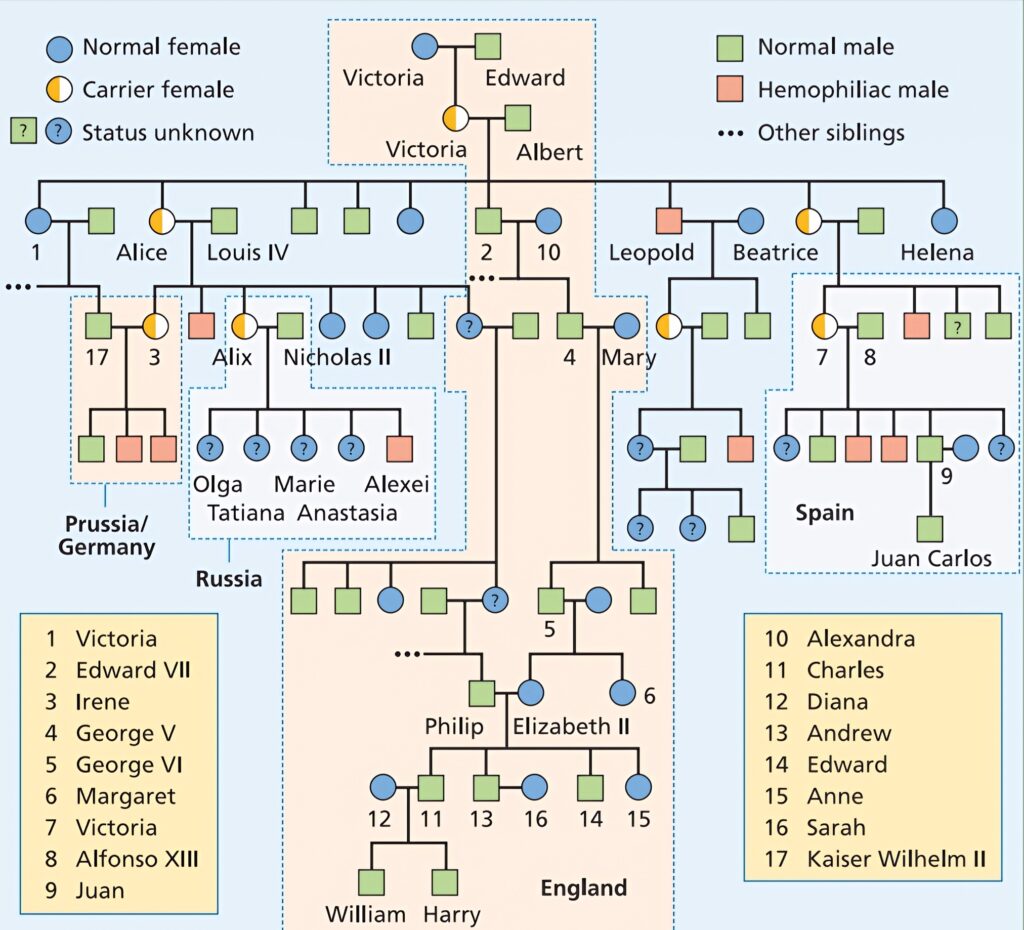
This genealogy outlines the path of hemophilia
throughout the royal families of Europe. The disease began with Queen Victoria, and because there was no family history prior to her children, it is thought she experienced a spontaneous mutation. Victoria’s daughters were carriers of the disease and brought it into the royal houses of Germany (Prussia), Russia, and Spain.

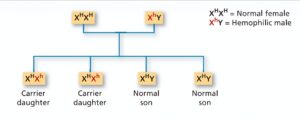
The children produced by a normal female (XHXH) and a hemophilic male (XhY), all daughters will be carriers (XHXh) and all sons will be normal (XHY).
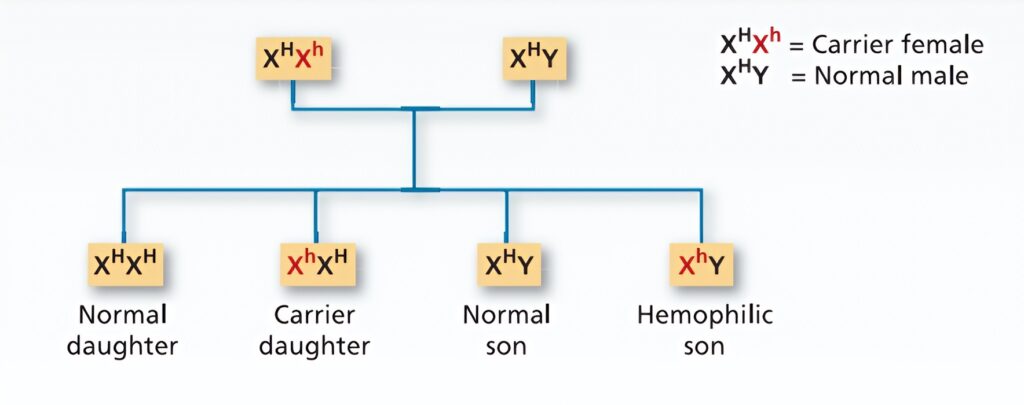
The children produced by a carrier female (XHXh) and a normal male (XHY), for each daughter born there is a 50% probability that she will be a carrier, and for each son born there is a 50% probability that he will have hemophilia.
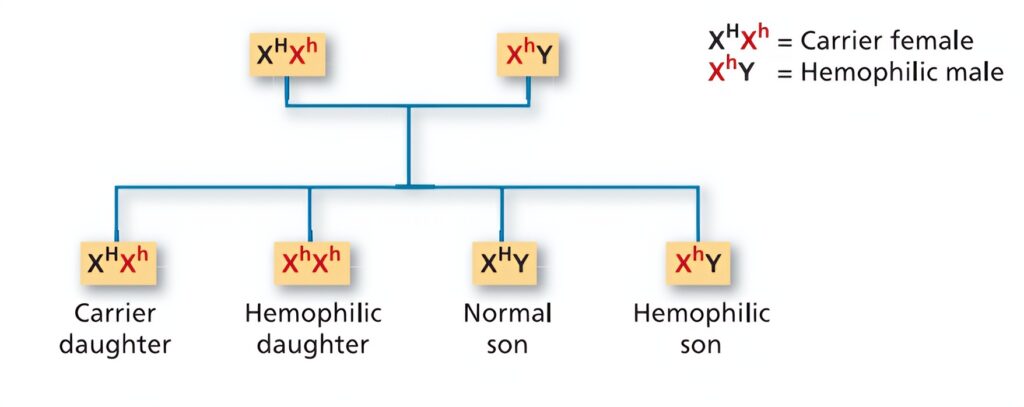
the children produced by a carrier female (XHXh) and a hemophilic male (XhY), all daughters born have an equal probability of being either hemophiliacs or carriers. Sons have an equal probability of being hemophilic or normal.

Hemophilia Symptoms
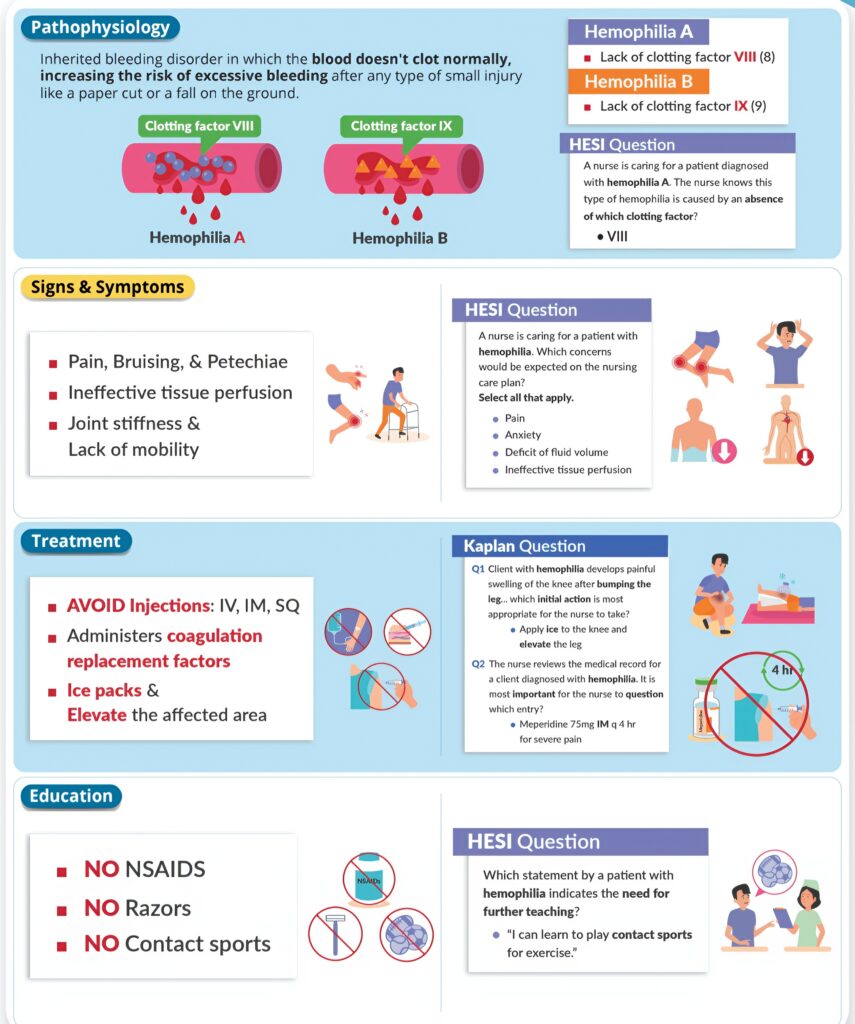
Bruising and Bleeding into the muscles and soft tissues, potentially creating a blood buildup called a hematoma.

Bleeding in the joints, typically the ankles, knees, and elbows. This can cause pain, swelling, and tightness.

Bleeding in the mouth (e.g., at the gum line or after tooth loss).

Nosebleeds that happen frequently and are difficult to Stop.

Head bleeding in infants after a difficult delivery.

Post-Shot bleeding (e.g., after intravenous injections or vaccinations).

NEED ANY HELP ?

If You Need Any Help Feel Free To Contact Us

Scroll to Top